

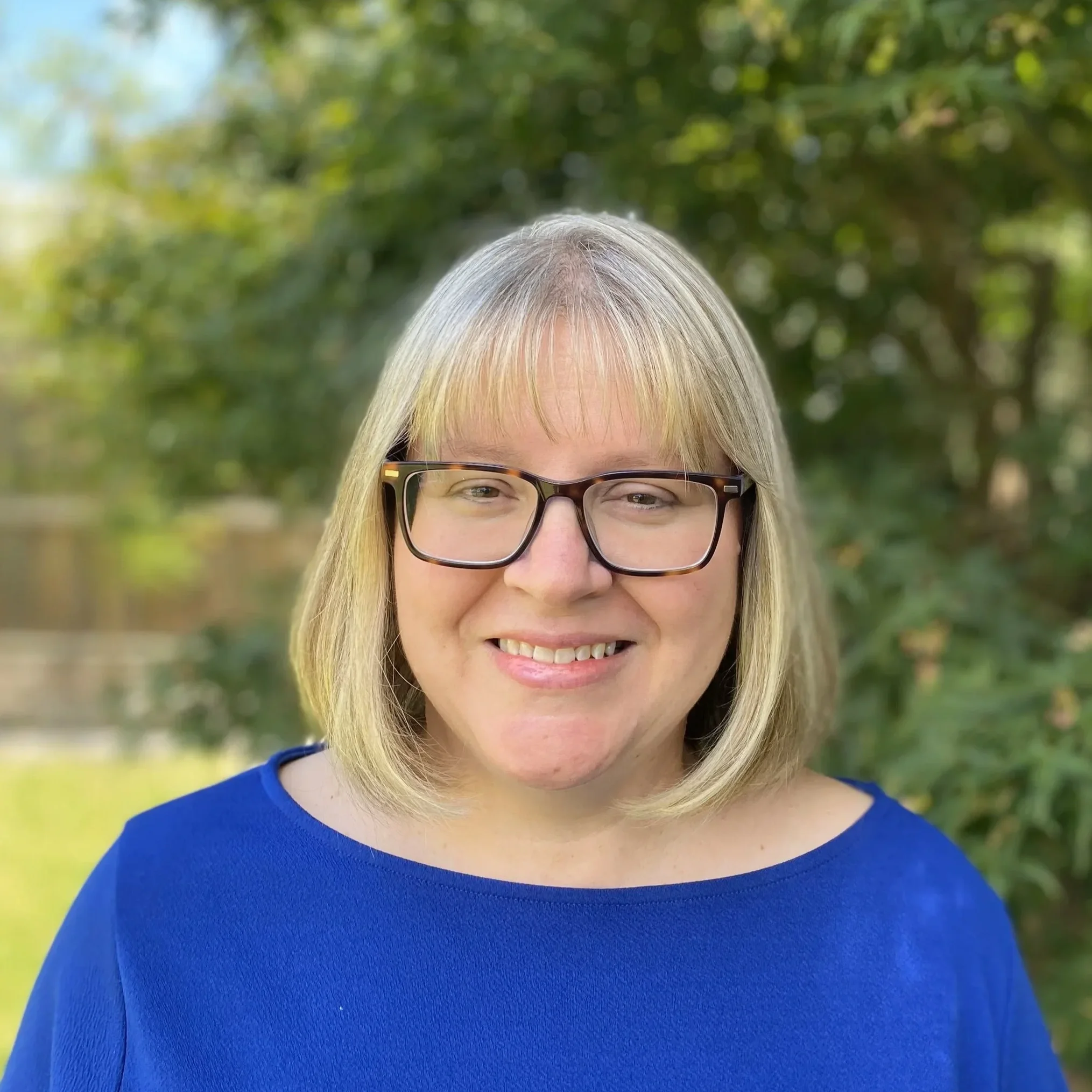
MARIA ROST RUBLEE
President
Maria Rost Rublee is Professor of International Relations at the University of Melbourne and an internationally recognised expert on nuclear politics, international security, and the role of norms and identity in international affairs. A prominent advocate for inclusive and gender-responsive security, her contributions have been recognised through the 2025 Academic Leadership Award from the Australian Political Science Association and her selection to the 2022 Top 50 U.S. National Security & Foreign Affairs Leadership List by the Center for Strategic & International Studies.
Rublee’s multi-method research has advanced scholarly and policy understanding of how perceptions, beliefs, and social dynamics shape national security decisions. She is the author of an award-winning monograph, co-editor of three volumes, and has published more than 40 peer-reviewed articles and chapters in leading outlets such as Security Studies, Comparative Political Studies, and the Journal of European Public Policy. Her work has been funded by over $2.5 million in internationally competitive grants from the U.S. Institute of Peace, NATO, the Japan Foundation, the Australian Department of Defence, and the Canadian Department of Defence, among others. As a global leader in national security, she has fostered new research and professional collaborations, including with the Carnegie Corporation-funded Bridging the Gap program, and the creation of the Global Taskforce on Diversity in Security Studies through the International Studies Association (ISA). She sits on editorial boards for International Affairs, Contemporary Security Policy, Nonproliferation Review and the Australian Journal of International Affairs.
Why do you think it is important to have women and gender diverse people in international security spaces?
Today’s world is more uncertain and dangerous than ever. We need all hands on deck to figure out how to understand and respond to Australian and international security issues. Including women and gender-diverse people in security spaces – acknowledging their expertise and authority to speak – will give us broader and richer ideas about whose security needs to be protect, through what means, and even what constitutes “security.” Gatekeeping leads to narrowed, tired ideas that will only take us backward.
What is your proudest achievement in direct support of the goal to have more women and gender diverse people in international spaces?
Seeing WIIS-A grow! So many people outside the typical “security expert” profile have engaged with enthusiasm – women want to part of security discussions, we just need to provide clear spaces and avenues for them to do so. Seeing so many people – including students – show up to WIIS-A events just underscores the importance of our work.
What is one area of growth you would like to see in this space?
A bigger platform, with engagement from think tanks, academia, government, and industry. The desire for inclusive spaces in national security is there – we just need the resources to meet the need.