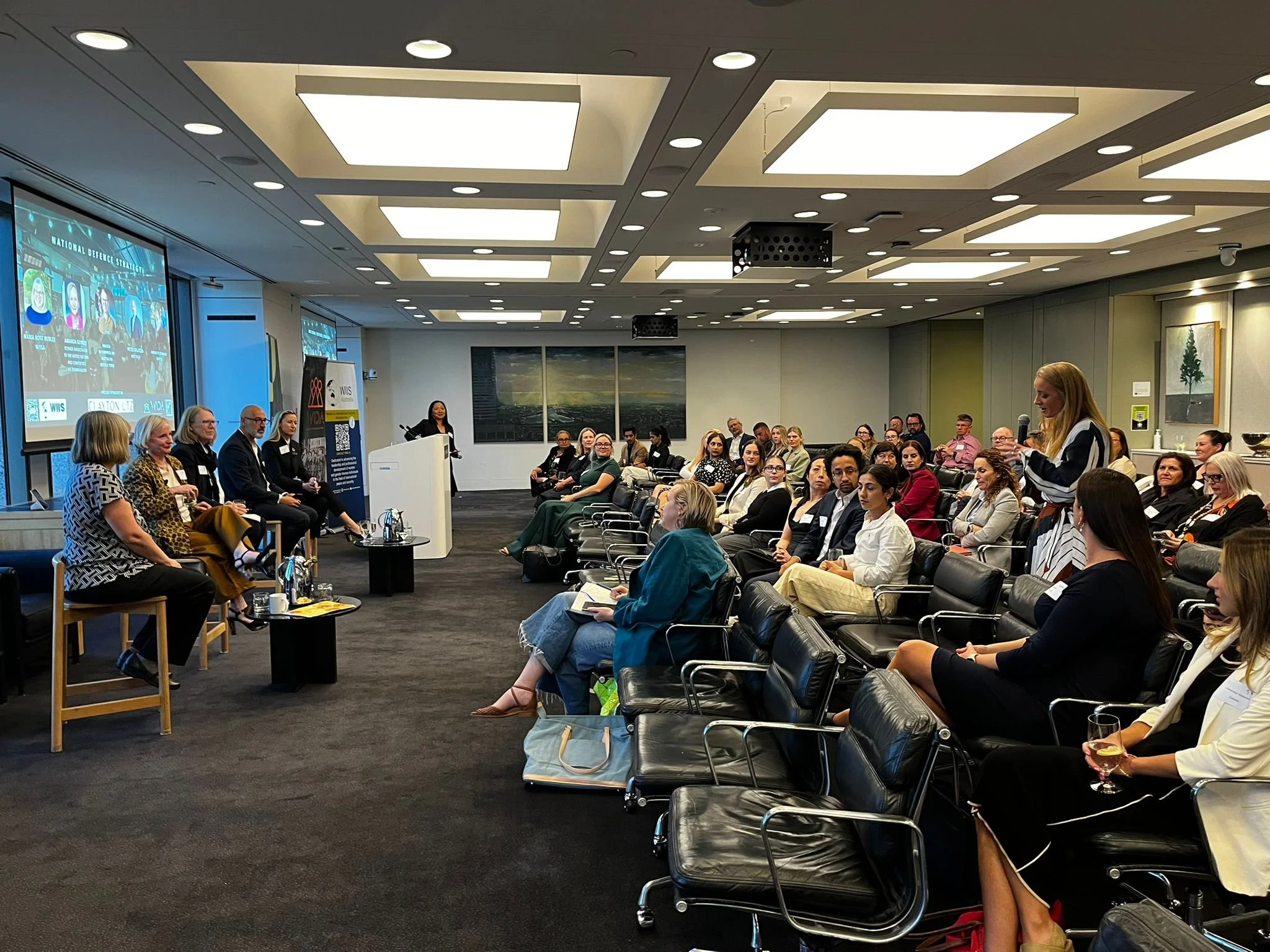
On 18th February 2026, Women in International Security – Australia (WIIS-A) partnered with Women in Defence Association (WiDA) for an in-person International Women’s Day event at Clayton Utz. The event brought the WIIS-A and WiDA Victorian community together to discuss the upcoming National Defence Strategy, which is expected to be published in early 2026.
The subject matter of the event was ‘Balance the Scales’ which was the United Nations Australia’s official theme for International Women’s Day 2026. The theme highlights the urgent need to ensure fair, inclusive, and accessible justice for every woman and girl. The gathering brought together people across the defence and national security ecosystem to connect, reflect and contribute to the collective effort required to accelerate progress toward gender balance, equity and inclusive leadership. The evening consisted of meaningful conversations, connections, and crucial insights in a relaxed, professional setting.
These were the following speakers and panellists:
1. Opening remarks by Joanne Teagle– Partner at Clayton Utz
The event opened with remarks and an acknowledgement of country from Rachel Falzon (WiDA National President) and Reena Strehle (WiDA VP Membership). Joanne Teagle then opened the discussion and introduced the guest speaker, the Hon. Peter Khalil MP, Assistant Minister for Defence.
The Assistant Minister of Defence, Hon Peter Khalil’s speech discussed the history of women’s service in Australia’s defence forces, outlined Australia’s current defence posture, and emphasised the essential need to view diversity as a strategic capability. His participation in this event highlighted the need for conversations surrounding gender to be propelled as the publication of the 2026 National Defence Strategy approaches.
With the various backgrounds of the panel, each speaker highlighted their own experiences from their respective industry – academia, government and industry.
The panel answered questions surrounding themes such as the trends that will shape and prepare Australia for the current complex strategic environment, areas of investment, structural reforms and a wider discussion of gender and security. Discussion ranged from an international diplomatic focus to a veteran deployment sphere to defence industry trends and focus.
The panel shared a crucial conversation in highlighting Australia’s unique and challenging Middle Power status and international alliances in an evolving rules-based order. With most political attention and conversations on AUKUS and maritime security, the panellists who were from an industry and business background asserted on the need for Australia to focus and invest in other crucial critical infrastructure and ageing platforms such as aircrafts, navy and cyber security systems.
Comparative insights were also drawn from countries such as Finland, Sweden and New Zealand which geopolitical pressures and strong civic engagement have contributed to enhanced crisis readiness and defence preparedness. Speakers noted Australia’s distinctive policing capability and considered how this could be further integrated into national resilience frameworks.
The panellists highlighted that Australia is particularly well positioned compared to other states, in the inclusion of women in defence, but rather it is the question of retention and gender conscious workplace environments, especially when women are stationed in foreign environments. Speaking from personal experiences, it was evident that there needed to be robust support from leadership for women to rise in the defence and security field.
In order to tackle these structural gendered social and economic issues, the panel discussed how community mobilisation and a shift in public awareness must continue – in which organisations such as WIIS-A and WiDA has contributed to this public discourse by submissions into the national inquiry of gender equality as a as a national security and economic security imperative.
The Q&A session saw a high level of engagement from the audience, panel speakers and Rachel Falzon (WiDA National president). The discussion from the panellists clearly sparked an appetite for reform and further conversations surrounding defence and gender in all industries and ages. Moreover, the networking session after saw meaningful connections forming, great atmosphere, and feedback from the audience about the panel’s overall chemistry together.
As WIIS-A continues to pursue the mission in supporting women and gender diverse individuals in the field of international security – this event broadened WIIS-A's networks whilst holding a crucial discussion about gender and the National Defence Strategy.
For more information about upcoming events and initiatives, we encourage you to join WIIS-A as a member and to connect with us on LinkedIn and Instagram.