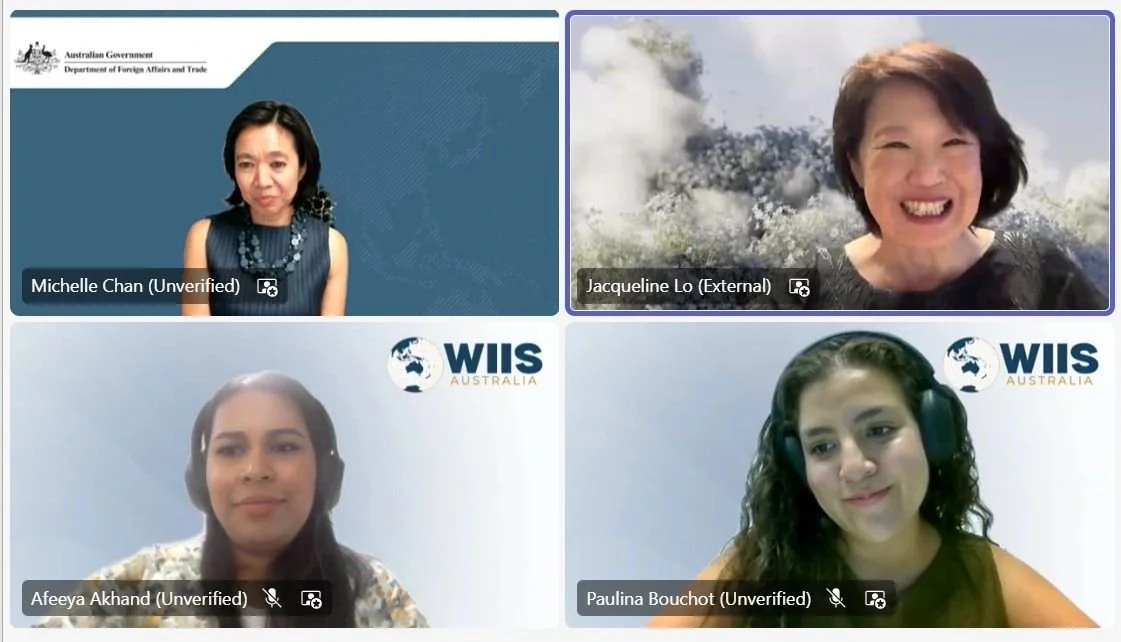
Following the panel discussion, which was moderated by Dr Jacqueline Lo, Director of the Indo-Pacific Research Centre at Murdoch University, audience members had the opportunity to ask a range of thought-provoking questions.
The importance of centring lived experience in conversations about international security was key theme of the webinar. Drawing on personal reflections, one speaker described navigating senior decision-making spaces as both the most senior woman and the only person of colour in rooms of high-ranking officials making time-sensitive, high-pressure decisions. These experiences highlighted the visibility, responsibility and isolation that can accompany such roles, and underscored the structural barriers that continue to shape leadership spaces across the sector.
Throughout the discussion, panellists stressed that breaking these barriers requires more than representation alone. While increasing the number of women of colour in international security is essential, meaningful progress demands deliberate structural change—including clear pathways to leadership, investment in mentorship and sponsorship, and a commitment to actively “holding the door open ”for others. These efforts were framed not only as matters of equity, but as strategic imperatives for retaining talent and strengthening the long-term effectiveness of the international security community. The conversation also acknowledged the disproportionate professional and personal labour often carried by women of colour, including mentoring, educating colleagues and representing entire communities, frequently without formal recognition or institutional support. Participants encouraged allies and leaders to take shared responsibility for advancing equity rather than placing the burden solely on those most affected by exclusion.
A key theme was the distinction between how women of colour are perceived and where their expertise actually lies. Panellists noted a persistent assumption that their professional value is tied primarily to gender or racial identity, such as being steered toward diversity-focused roles or countries of heritage regardless of broader skillsets. While lived experience can provide valuable insight, it should not define professional capability. Narrowing women of colour into identity-linked portfolios limits career progression, constrains institutional thinking and ultimately weakens complex security decision-making.
The discussion also addressed the often-contested language of “identity politics,” encouraging participants not to avoid conversations about race, gender and power simply because they may feel uncomfortable. Discomfort, speakers noted, can signal that entrenched assumptions are being challenged. In international security, institutions operate within historical and cultural power dynamics; ignoring how identity shapes access, authority and credibility risks creating blind spots in both institutional culture and policy development. When approached constructively, these conversations can deepen institutional awareness, improve cohesion and support more nuanced and effective policymaking.
As Women in International Security Australia continues its mission to advance the leadership and professional development of women in international peace and security, the event reinforced a clear message: meaningful change requires sustained effort, institutional accountability and active allyship. Elevating the inclusion of women of colour is not a peripheral issue. It is central to building a more effective, representative and resilient international security community.